
Women in Transport on the challenge facing the transport sector, the work done to date, and what comes next (June 2026)
The numbers have not changed. The urgency has. The transport sector employs 2,517,000 people in the UK. By 2030, it faces a projected shortfall of between 409,000 and 618,000 workers. Around 350,000 of those currently in the sector are due to retire within the next four years. Only 6% of the current workforce is aged 16 to 25, less than half the proportion you would expect if young people were entering transport at anything close to a normal rate.
These figures come from research commissioned by the Department for Transport and produced by NSAR, the National Skills Academy for Rail (published in July 2024). They are as authoritative as it gets.
They tell a story that everyone in this sector already knows. What is new is the wider context in which that story now sits. In May 2026, the interim Milburn Review into young people and work confirmed what many in the sector have feared: the UK now has nearly one million young people who are NEET - not in education, employment or training. That is one in eight people aged 16 to 24. It is the highest figure recorded in more than a decade. Six in ten of those young people have never held a job. The cumulative annual cost to our economy is estimated at £125 billion. The Review did not shy away from the language: Britain is at risk of producing a lost generation.
For the transport sector, this is not background noise. It is directly relevant. At the very moment transport faces its most serious workforce challenge in a generation, the pool of young people available and engaged with the labour market is shrinking, not growing.
The problem is not what most people think it is
Ask why young people are not choosing transport and most people say awareness. They think it is just driving and engineering. They don’t know you can work in finance, marketing, technology, sustainability or planning within a transport organisation.
That is true. But it is not the whole picture.
Research commissioned by WSP and conducted by Savanta in 2022 found that 22% of students would actively reject a career in transport or utilities - despite those same students ranking transport third among the sectors most important for achieving net zero. They know transport matters. They have just decided it is not for them.
Research by LadBible and The King’s Trust tells us what young people actually want from a career: to make a difference, to improve people’s quality of life, to contribute to sustainability, to help others, to feel fulfilled. Transport delivers against every single one of those things, every day, for millions of people.
The gap is not between what transport offers and what young people want. It is between what transport offers and what young people think it offers. And that gap is forming early in Years 7 to 9, between the ages of 11 and 14 - before anyone is thinking seriously about careers. By the time transport gets a chance to make its case, many young people have already moved on.
The Milburn Review adds a further dimension. Health and mental health are now a significant driver of NEET status. The number of young people outside education and employment because of a health condition has risen by 70% over the past decade. For those who become NEET for health reasons, nearly eight in ten remain NEET more than two years later. This is not a population that will simply find its way to the transport sector without deliberate outreach. These are young people who need to be reached early, when career identities are still forming and before disengagement sets in.
The data also tells us something important about women specifically. Across every mode, the female proportion of 16–24 year-old workers are consistently higher than among older cohorts. Women are entering transport. Something is happening to their experience of the sector as they progress. Attracting young women is necessary but not sufficient - the sector also needs to retain them.
The sector is not short of effort. It is short of coordination.
Here is what Women in Transport’s Inspiring the Next Generation initiative has spent the past year understanding: the problem is not that nobody is doing anything. The problem is that everyone is doing something, separately, and the collective impact is much less than it should be.
Generation Logistics, backed by the DfT and now in its fourth year, has reached an audience of over 658 million people and grown awareness of logistics careers by 37% in three years. That is what a properly resourced, coordinated sector campaign looks like. But Generation Logistics covers logistics. There is no equivalent coordinated campaign for rail, highways, aviation or maritime.
CIHT has an Outreach Ambassador programme and activity packs for schools. WISE has three decades of experience increasing women’s participation in STEM. EngineeringUK reaches over 200,000 young people a year. Individual employers and colleges are running their own initiatives. The West Midlands Logistics and Distribution Cluster has secured £50,000 to trial a local awareness initiative.
All of it good. None of it joined up.
Schools cannot navigate this landscape. A careers adviser who wants to bring transport into the conversation does not know where to start. Employers do not know what their peers are doing. Young people, who are not making fine distinctions between logistics and rail and highways, are getting a fragmented message, or more often, no message at all.
This is the collaboration gap. It is, in our view, the most important problem to address.
What Women in Transport has built - and what we learned
Over the past year, Women in Transport brought together a steering group of more than twenty organisations - operators, consultancies, colleges, design agencies, active travel bodies and technology firms all giving their time to understand this landscape and shape a response.
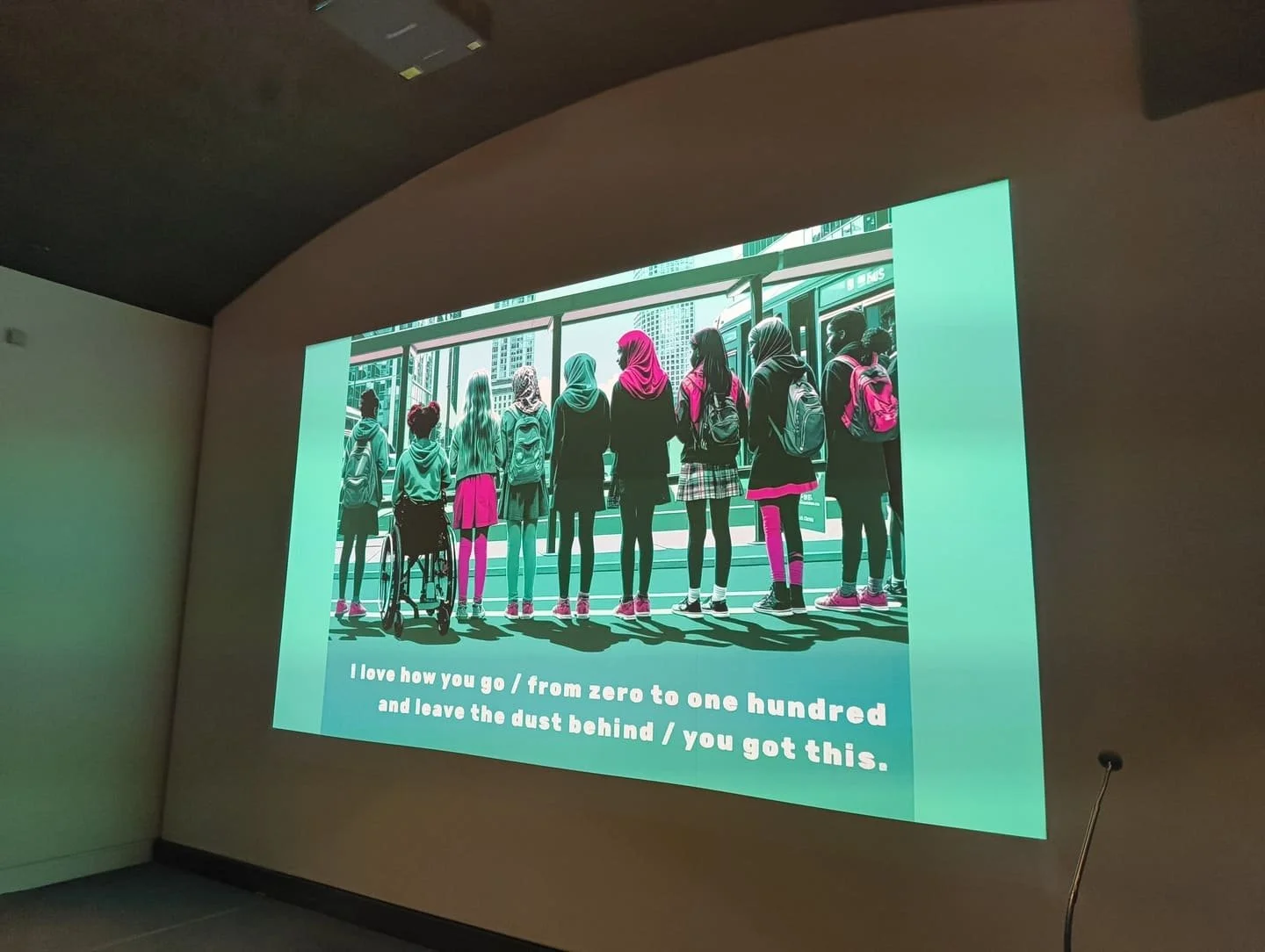
We commissioned One Black Bear to develop campaign creative, and the result - Let’s Make the Connection is now live on the Women in Transport website. The campaign is built around a straightforward conviction: transport is not all driving buses and building roads. It is a career that shapes communities, protects the planet, and enhances daily life. We just need to help young people make that connection.
We have developed a full suite of communications assets: an employer survey to establish an industry baseline on under-25 recruitment; launch email copy and LinkedIn posts for members and partners to share; and a revised campaign page with CEO video and clear calls to action.
But the strategic review we held in February 2026 required some candour. Women in Transport is a volunteer-led organisation. The ING steering group is made up of professionals giving their time around primary jobs. We have the coalition, the campaign, the survey tools, and the relationships. What we do not have is the sustained professional capacity to run a large-scale research programme, distribute a survey at scale, and turn findings into a publishable whitepaper on our own.
That is not a retreat. It is a clear-eyed assessment of where we add the most value and where we need partners.
What Women in Transport should actually do
The infrastructure exists. The effort is real. What is missing is not another organisation launching its own version of all of this. What is missing is someone who sits across all of it who knows what everyone is doing, amplifies what is working, connects the dots between organisations that are not talking to each other, and makes sure the sector’s collective effort lands with more force than the sum of its parts.
Women in Transport is that organisation. Our role is to be the connective tissue: to champion the work being done by others, amplify it to a wider audience, and make introductions between organisations whose efforts would be stronger together.
In practical terms, that means:
• Hosting a dedicated web page linking to what organisations are already doing - making existing work more visible, not duplicating it
• Making introductions between aligned organisations that are not yet talking to each other
• Publishing our findings from the ING initiative as a shared evidence base the sector can point to
• Using our platform, our events, our communications, our APPG role to push the case for a sector-wide coordinated approach to the youth pipeline
• Seeking a research partner with the analytical capability and sector relationships to give our employer survey findings the professional weight they need to land with policymakers and funders
The Milburn Review has done something important: it has put the NEET crisis into the national conversation at the highest level. The government’s Youth Guarantee and £820 million investment over the spending review period represent a genuine policy opening. Transport should be part of that conversation - actively, loudly, and in coordination.
What we are asking of you
If you are a member, a partner, or part of the ING steering group, there are three specific things you can do right now.
• Share your story. The campaign needs real people talking about how they got into transport and why they would recommend it. A short video or a few paragraphs is enough. We will do the rest.
• Tell us what you are already doing. If you are running a school’s programme, a work experience scheme, an apprenticeship initiative or a charity partnership - tell us. We will map it, share it, and help make it visible.
• Make an introduction. If you know a funder, a research organisation, a school, a careers body, or a sector partner who should be part of this conversation and is not yet - connect us.
The transport sector faces a serious workforce challenge, and everybody in it knows it. We have a generation of young people who are disengaged from the labour market, who want purposeful work, and who have never been told that transport is the sector where that purpose lives.
Closing that gap is not beyond us. What it requires is better coordination of the effort that already exists, a shared evidence base, and a willingness to champion each other’s work rather than duplicate it.
The next generation is out there. We just need to reach them together, clearly, and at the right moment.
Women in Transport | womenintransport.com | Inspiring the Next Generation – Let’s Make the Connection | June 2026
To share your story, tell us about your initiative, or discuss how we can work together, contact Dal Kalirai, Development Director: daljit.kalirai@womenintransport.com
Download the full Inspiring the Next Generation – Let’s Make the Connection Progress Report at womenintransport.com.
Annual membership for Women in Transport is £60, providing access to professional development and networking opportunities. Corporate packages are available; for inquiries, please email us or visit our website.
Our partnership packages are a flexible and accessible way to support Women in Transport and your organization's equity, diversity, and inclusion objectives. Learn more about our partnership opportunities here and contact us if you would like a meeting to discuss how we can work together.
Follow us on Linkedin at Women in Transport, and at @transportwmn on Instagram for events, news, and updates.