
by Jade Neville | Chair, Women’s Safety Group, Women in Transport | Co-founder, Women in Parking UK
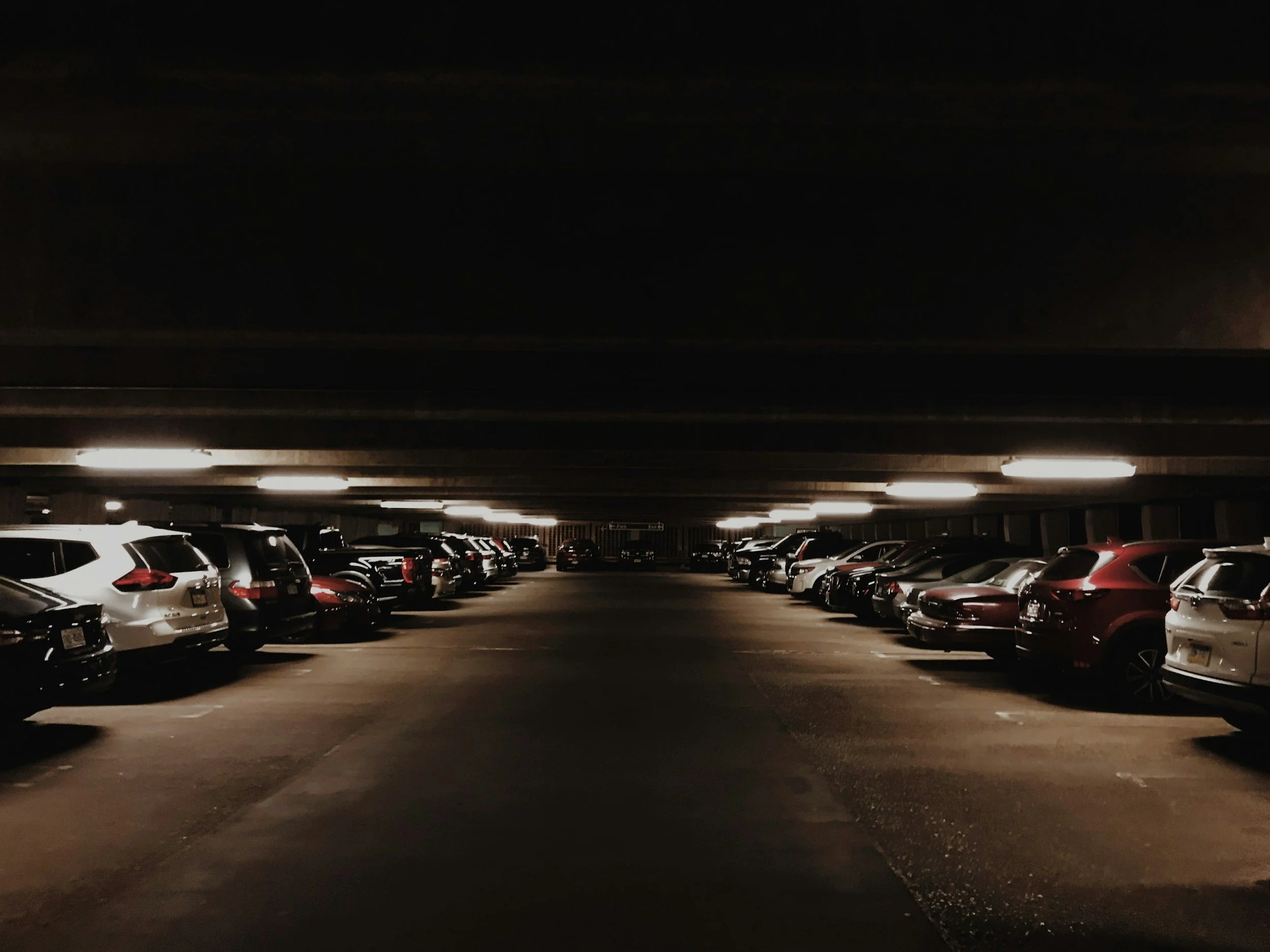
I’ve stood in poorly lit parking areas on both sides of the Atlantic, and the feeling is exactly the same.
That instinctive shift in awareness. Keys ready, pace quickened, a quick text to let someone know you’ve arrived safely. But I’ve felt it on late-night train platforms too. At bus stops where the shelter has no sightlines. In subways and underpasses that were clearly designed for throughput, not for the person walking through them alone at 10pm.
The feeling is consistent because the problem is consistent. It crosses every mode, every type of infrastructure, every part of the country.
As co-founder of Women in Parking UK and Chair of the Women’s Safety Group for Women in Transport, I sit at an intersection of two industries that share a responsibility here, and too often share the same blind spots.
The data tells us the situation is not improving. In some respects, it is getting worse.
The numbers we need to sit with
The 2021 ONS data on perceptions of personal safety is still the most widely cited benchmark, and it remains stark: one in two women felt unsafe walking alone after dark in a busy public place, and four in five felt unsafe in a park or open space after dark.
But the more recent picture is, if anything, more troubling.
Girlguiding’s 2025 Girls’ Attitudes Survey, with fieldwork carried out February to May 2025 across 2,640 girls and young women, found that 56% of girls aged 11-21 say they do not feel safe on public transport alone. In 2022 that figure was 45%. In three years, the proportion feeling unsafe has risen by eleven percentage points. A third have avoided public transport altogether because of safety fears, and 86% say they have avoided going out in the dark.
These are not outlier findings. They reflect a pattern that the academic literature has been documenting consistently. A peer-reviewed systematic review published in PLOS ONE in February 2024, drawing on 28 studies of harassment in public transport environments, found high frequency, widespread underreporting, and a clear pattern of women adapting their travel behaviour as a direct consequence of safety concerns. The gap between existing safety measures and what women actually experience as effective was a consistent finding across the evidence base.
And the data on lived experience of violence and harassment reinforces all of it. In the year ending March 2024, ONS figures show that 11.2% of women had experienced harassment in the previous 12 months, compared to 6.6% of men. Women were also more likely than men to have experienced stalking, sexual assault, and domestic abuse in the same period.
This is not background context. It is the operating environment in which women use our transport networks every day.
A design problem, not a perception problem
There is a tendency, even in well-intentioned conversations, to treat women’s safety concerns as something to be managed through communication. Better signage. Personal safety apps. Campaigns reminding people to report incidents. These things have their place, but they leave the underlying problem untouched.
The underlying problem is that transport infrastructure across the UK has been designed, planned, approved, and built by rooms that did not reflect the full range of people using it. That is not an accusation. It is a structural observation, and one that the evidence keeps returning to.
I know this most intimately from the parking world, where I have spent the better part of two decades. A multi-storey car park can tick every box on a Secured by Design checklist and still feel threatening. The cameras are there. The lighting meets the standard. But there are no sightlines at the stairwell entrance, the help point is broken, and there is nobody on site after 6pm. The checklist was written to measure what is measurable. Whether the space feels safe to a woman walking to her car alone at night is a different question, and it rarely get asked of the right people. The same logic applies to bus shelters, station interchanges, platform waiting areas, and the “last mile” stretches between transport nodes and final destinations.
These are the pressure points where women’s safety breaks down, and they are consistently under-examined in the design and planning process.
A live policy failure
The London Assembly Transport Committee published its report on Accessibility and Inclusion in Transport Planning in February 2026. The findings are worth sitting with.
The report recommends that the Mayor require TfL to pilot gender-responsive budgeting, and that TfL establish new advisory panels to ensure diverse demographic representation across its planning and design work. The Committee Chair noted that women, alongside disabled, older, and low-income Londoners, currently face barriers to using the network, and that TfL’s data lacks the depth and nuance needed to understand those barriers properly.
This is Transport for London. The most heavily resourced, most scrutinised transport authority in the country. If the infrastructure for genuinely inclusive planning does not yet exist there, the picture elsewhere is unlikely to be better.
That is not a counsel of despair. It is a clear signal that the work is still to do, and that those of us inside the industry have both the standing and the responsibility to push for it.
What this asks of us
Women in Transport exists, in part, because representation is not just a values question. It is an outcomes question. When diverse voices are absent from the rooms where decisions are made, the decisions are worse. Not occasionally. Consistently.
There are three things worth doing differently, starting now.
First, build women’s safety criteria into design briefs from the outset, across every mode. Not as a retrofit after the scheme is drawn. If it is not in the brief, it will not be in the build.
Second, insist on diverse representation at design review stages, as a genuine requirement, not a tick-box exercise. If nobody reviewing a station interchange or a multi-storey car park has navigated one alone at night, they will miss things that matter.
Third, treat this as a leadership issue, not a facilities management issue. The conversation about sightlines, staffing, and infrastructure design belongs in the boardroom, not just in the operational debrief.
The room matters
The Girlguiding data tells us that the next generation of women is moving through our transport networks with their confidence shrinking, not growing. A third are already avoiding public transport. That is a system failure. It is also, for those of us who work in this industry, a professional responsibility. We are at the tables. We sit on the boards, in the committees, in the strategy sessions. The opportunity to shape what gets built and how it gets used is genuinely ours.
The spaces between us can be made safer. That work starts in the room.