
Every bus journey begins at a bus stop. Bus stops connect us to work, friends and family, appointments and everything else our communities have to offer. When they are hard to use, people lose out on all of it.
Campaign for Better Transport has published a new report, No stopping us now: Towards accessible bus stops for all, and its headline figures make uncomfortable reading:
Only 15% of people with visual impairments and 18% of people with mobility impairments find it easy to use bus stops.
Disabled people make only a third as many journeys per week as the national average across all modes of transport.
These two facts are linked. Every journey that doesn't happen leaves a gap in someone's week: a missed appointment, a job not applied for, a visit not made.
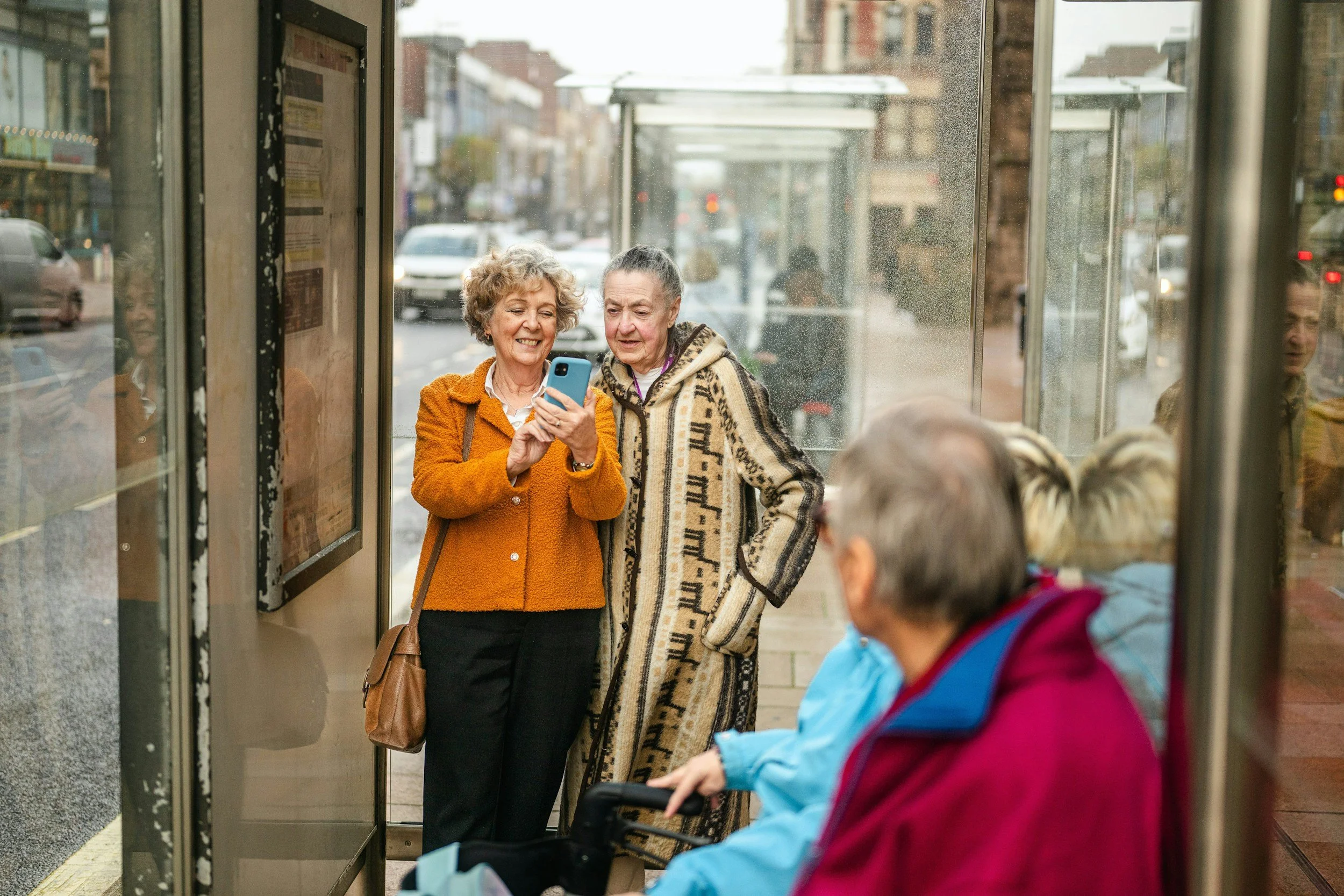
What would make a difference
The report sets out practical improvements, including:
Safe road crossings so people can actually reach the bus stop, along with dropped kerbs and tactile paving
A flat, solid surface at the stop, wide enough to manoeuvre a wheelchair
Bench-style seats with back rests and arm rests
Clear, up-to-date timetables on display
Digital screens showing when the next bus is due, with audio announcements that can be activated by a push button, or automatically by a passenger's phone or personal key fob
Not every feature will suit every stop, and the report rejects a one-size-fits-all approach in favour of measures adapted to local circumstances. There is, however, a bare minimum. Every bus stop should have an up-to-date timetable on display. Every bus stop should have step-free access and enough space to manoeuvre a wheelchair.
Getting there will mean local authorities and their partners reviewing what each stop needs, and being given the resources to deliver improvements over time.
Dr Emma Partlow, Chief Executive of the National Centre for Accessible Transport (NCAT), sums up the starting point: barriers to bus travel begin before a passenger boards, and safe access to stops, suitable seating and information are essential. She adds that early engagement and co-production with disabled people can help ensure stops meet passengers' needs.
Why this belongs on our agenda
Sonya Byers OBE, Co-Founder of Women in Transport and Chair of the D&I Bus Group, said: “Women in Transport supports any initiative that makes public transport more inclusive, safer and more accessible for everyone. Through our dedicated D&I Bus Group, we have been driving diversity, equity and inclusion across the bus sector since 2019, championing practical changes that improve both passenger and workforce experiences. We warmly welcome this report from Campaign for Better Transport and its clear, pragmatic recommendations. Accessible bus stops are fundamental to creating a transport network that works for all, enabling more people to travel with confidence, independence and dignity.”
The Women in Transport D&I Bus Group exists to push for a bus sector that works for everyone who relies on it, and everyone who works in it. Bus stops are where that ambition meets the pavement. A stop is the public face of the service, and it tells people very quickly whether they were considered when it was designed.
There is a clear overlap with our wider work on women's safety, too. Women are more likely than men to travel by bus, and many describe the bus stop as the most exposed part of the journey. Good lighting, sheltered seating, clear information and sensible siting make a stop easier to use for a wheelchair user, a parent with a buggy, someone with sight loss, or a woman waiting after dark. Designing for access and designing for safety often lead to the same practical answers.
The report's emphasis on co-production rings true with us as well. The people who use these stops every day know what is broken, and the best fixes begin by asking them.
What you can do
Read the report. No stopping us now: Towards accessible bus stops for all is available from the Campaign for Better Transport website.
Look at your own bus stops. If you work in bus operations, local authority transport or planning, take a fresh look at the stops you are responsible for. Do they meet the bare minimum?
Involve disabled passengers early. Bring them into decisions before designs are fixed.
Join the conversation. Get in touch with the D&I Bus Group to share what you are seeing in your area, or to get involved.
Better bus stops can give disabled people greater independence and access to work, education, essential services and their communities. That is a goal worth backing, and we are glad to add our voice to Campaign for Better Transport's call.