
Women in Transport is one of 54 organisations to have signed a joint statement, coordinated by Campaign for Better Transport, calling on the Government to act urgently on transport emissions after a summer of heatwaves and wildfires across Britain. The statement was published on 26th August 2026 and was covered exclusively by the Guardian on the morning of its release.
Both Jo Field OBE, Chair of Women in Transport, and Sonya Byers OBE, our CEO, are signatories. They join a coalition spanning public transport, active travel, shared transport, climate and clean air campaigning, health, communities, equalities, trade unions and local economies. Members include ASLEF, the RMT, Asthma + Lung UK, the Royal College of Physicians, Cycling UK, Living Streets, Green Alliance, the Rail Freight Group, CIHT and the Lancet Countdown on Health and Climate Change.

What the joint statement says
The joint statement describes this summer's heatwaves and wildfires as "immediate, real-world manifestations of the climate emergency" and points out that transport is responsible for more carbon emissions than any other sector in the UK. It calls on the Government to honour the commitment it made in opposition and set a national trajectory for sustained modal shift, in line with the sustainable transport hierarchy, raising the proportion of journeys made by public transport, shared transport, walking, wheeling and cycling, alongside its existing commitment to a rail freight growth target.
Two further asks sit alongside: the Government should resist calls to delay the transition to electric vehicles, and it should act to improve the resilience of transport networks to extreme weather.
With the majority of journeys under five miles, better local transport makes it easier for people to reach shops, schools and health services and to see friends and family. And because the climate emergency is also a health emergency, the coalition argues that the same measures ease pressure on the NHS and save money for the public purse.
Why Women in Transport signed
Jo Field OBE, Chair of Women in Transport, said:
"Women are often disproportionately affected by both the impacts of climate change and inadequate access to public transport. They are more likely to make complex journeys involving caring responsibilities, to depend upon public transport and walking, and to experience isolation and lack of access to employment and opportunities when transport is unavailable. As extreme weather becomes more frequent, these inequalities risk becoming even more pronounced. Tackling the climate emergency therefore means ensuring that everyone can access sustainable transport, creating healthier, more connected communities where everyone can participate and thrive."
Decarbonisation debates tend to be conducted in tonnes of carbon and billions of vehicle kilometres. Those numbers describe journeys made by people whose travel needs are not evenly distributed. Trip-chaining, off-peak travel, travelling with children or with people being cared for, walking the last mile in the dark: these patterns determine whether a network is genuinely usable, and they are the ones most likely to be underserved when investment follows peak-hour commuter flows.
Ben Plowden, Chief Executive of Campaign for Better Transport, told the Guardian that modal shift means "creating the conditions which allow people to travel for a higher proportion of the trip by walking, cycling, public transport and shared mobility than by private cars", and that this requires central government to set an overall target alongside continued growth in electric vehicle uptake.
The Department for Transport responded by pointing to the £2 bus fare cap, frozen rail fares, £4.5 billion for cycling and walking and £7.5 billion behind the ZEV mandate, adding that its focus is on giving people better alternatives rather than restricting how they get around.
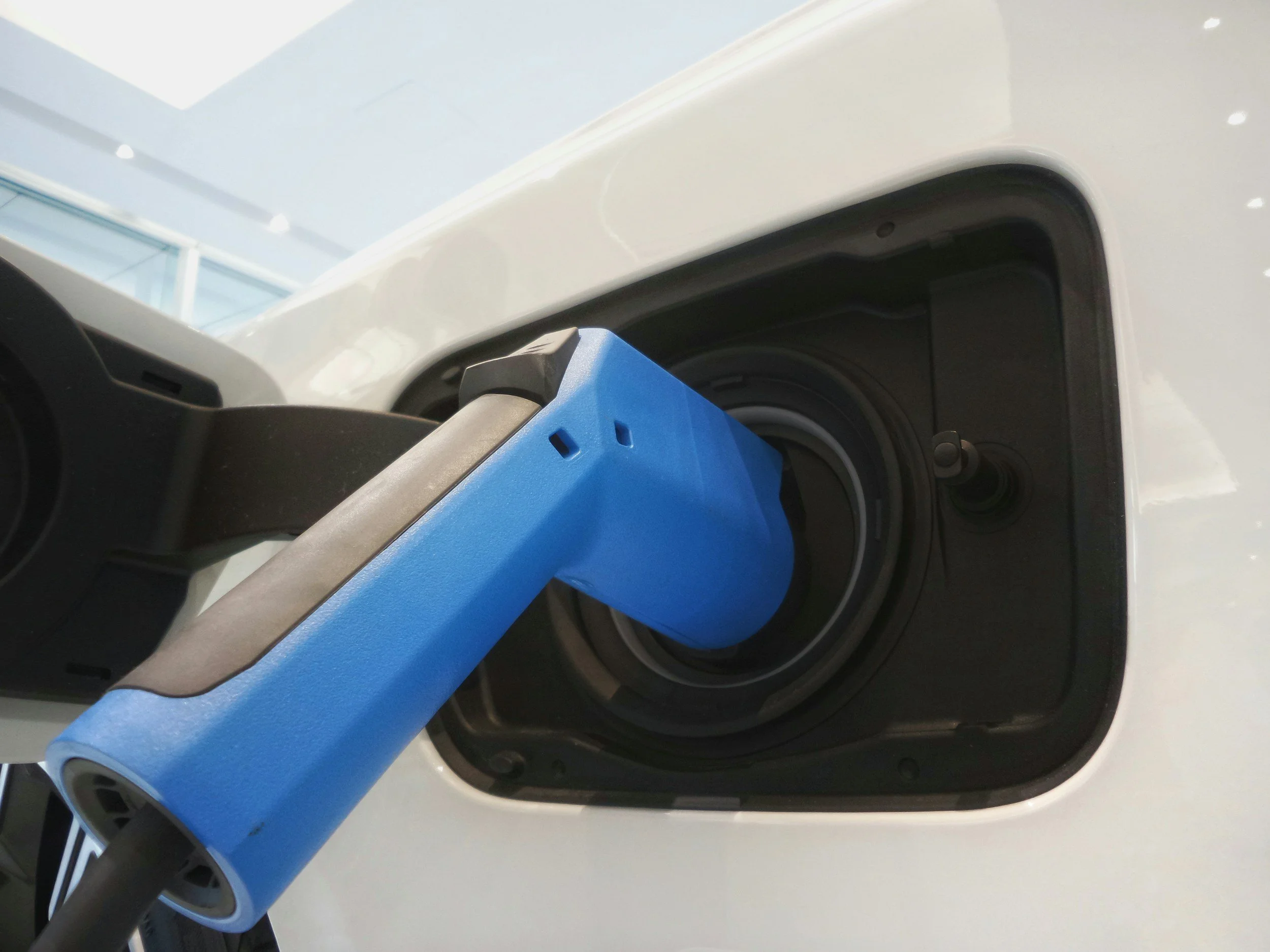
The challenge: electric vehicles are essential, but not sufficient
Domestic transport accounted for 31% of the UK's net greenhouse gas emissions last year, and sector emissions rose by 2%, largely on the back of increased petrol and diesel use in road transport. No other sector comes close to this figure: buildings and product uses account for 22%, agriculture 13%, industry 11%.
Electrification alone will not close this gap on the timescale the carbon budgets require, and it does nothing for congestion, road danger or the social exclusion that comes with car dependency.
Analysis discussed within the coalition suggests that the UK needs to reduce car mileage by around 20% by 2030 against a 2019 baseline to stay on track, equivalent to roughly 50 billion fewer car driver and passenger kilometres a year in England and Wales. Absorbing that demand would require close to a doubling of public transport use, which would bring the UK nearer to its European peers rather than into unfamiliar territory.
Norway is the reference case for what an EV-first strategy achieves and where it stops. Sustained incentives – zero purchase tax, exemption from road tolls – have taken new passenger car sales to almost 100% zero-emission, but the total fleet is only around 30% electric, because turnover is slow. The incentives have been expensive in forgone revenue, and they are politically difficult to withdraw once high-income early adopters have priced them in. Cheap electric driving has also pulled some trips away from public transport and active travel. In response, Norway has also run a national Zero-Growth Goal for passenger transport in its major urban areas since 2012, so that growth in travel is absorbed by public transport, walking and cycling rather than by more car traffic.
Outlining the investment case
A 2023 report for the TUC by Transport for Quality of Life costed the modal shift needed. Operating public transport at the scale required comes to roughly £19 billion a year by 2030, assuming no new fare revenue so that fares can come down. Capital investment comes to around £119 billion by 2035, or roughly £10 billion a year. Together, that is in the region of £30 billion a year.
Set against that is a substantial return. Better connected, less congested city centres could add up to £50 billion a year to GDP through productivity gains. The programme would create green jobs, reduce social isolation, and improve public health through cleaner air, safer streets and more active travel.
Professor Mumtaz Patel, President of the Royal College of Physicians, put this last point plainly in the coalition release: air pollution is one of the most significant environmental threats to health in the UK, and its costs are landing on an already stretched health service.
The framing question
Given that around 70% of trips are under five miles, local improvements can be both high-impact and largely non-partisan – few people object to a reliable bus, a safe crossing or a route to school that their children can walk. In this way, positive targets for public transport growth, cycling and walking do the same work as a car reduction target without inviting the same clashes. The wording of the joint statement reflects that thinking by leading on shops, schools, health services and family rather than on restrictions to movement.
A political window, and a devolution gap
Together, the coalition members see a genuine opportunity in the new Prime Minister's stated focus on public transport and devolution. There is a gap in the machinery, however. Mayors and combined authorities are gaining capital funding and powers, but without revenue funding to run services or a statutory carbon duty to test their decisions against, there is a real risk of capital flowing into car-centric schemes.
The social trends run the coalition's way. Young people are less likely to drive than previous generations, producing a cohort at ease with public transport, and people are already travelling slightly less per head, although population growth offsets it. The public is broadly concerned about climate change, too, although many people believe their concern is unusual, which suppresses any appetite for action that is already there.
What happens next
Campaign for Better Transport’s 2025-26 impact report sets out a year in which rail fares were frozen for the first time in 30 years, the Bus Services Act 2025 extended protection to socially necessary services, bus funding moved to a multi-year settlement allocated by local need rather than by bid-writing capacity, and £15 billion was announced for local transport in city regions. Notably, bus trips outside London rose by 15% under the fare cap, and local buses account for 58% of all public transport trips made by people in households without a car. The report also commits the organisation to working with others on a national mode shift target in the year ahead, and the coalition supports this.
For Women in Transport, the work from here is to keep the equity dimension attached to that target. A modal shift trajectory delivered without regard to who travels, when, and why will move carbon numbers while leaving the same people stranded. Delivered well, it would do something considerably better: make the transport network usable for the people who most need it, and take carbon out of the system as a consequence.