
Who Gets to Shape the Future?
This year's National Engineering Day theme, Engineering the Future - Ideas That Will Shape Our World, is TfL's interpretation of the Royal Academy of Engineering's The Engineers of 2076 theme.
It's a theme that has really got me thinking.
When we talk about shaping the future, it's easy to focus on technology, innovation and the challenges ahead. We talk about artificial intelligence, engineering breakthroughs and new ways of working. All of these things matter.
But I've found myself coming back to a different question:
Who gets to shape those ideas in the first place?
Because while we often focus on the innovations that will change our world, we don't always spend enough time thinking about the people behind them.
The more I've reflected on conversations about innovation, inclusion and the future workforce, the more I've realised that the future is often shaped by the people who feel able to participate in it.
That might sound obvious, but participation isn't something we should take for granted. Confidence, encouragement, opportunity and a sense of belonging all influence whether someone feels able to speak up, share an idea or put themselves forward.
One thing that has particularly struck me during recent conversations about AI is the different levels of confidence people bring to the discussion. Some colleagues are already experimenting, sharing ideas and discovering new ways of working. Others are more hesitant, unsure where to start or worried they don't know enough.
It's reminded me of something I've observed throughout my career: the barrier is rarely talent. More often, it's whether people feel confident enough, supported enough and included enough to contribute.
For me, that's why inclusion matters so much.
Representation is important, but true inclusion goes beyond numbers. It's about creating environments where people feel comfortable sharing their ideas, where different perspectives are welcomed and where lived experience is recognised as a strength rather than a difference.
Through conversations with colleagues and through my involvement in women's networks, I've had the privilege of hearing experiences very different from my own. Some of the most valuable lessons I've learned have come from those conversations. More than once, someone's perspective has challenged my assumptions and helped me see an issue in a completely different way.
As the challenges we face become more complex, our ability to listen and learn from one another becomes even more important.
Whether we're talking about AI, accessibility, sustainability or the future of transport, the best ideas rarely come from a single perspective. They emerge when people with different backgrounds, experiences and viewpoints come together to tackle a problem.
That's why I've come to see innovation and inclusion as closely connected. Both depend on curiosity. Both require us to listen. And both are stronger when we create space for voices that might otherwise go unheard.
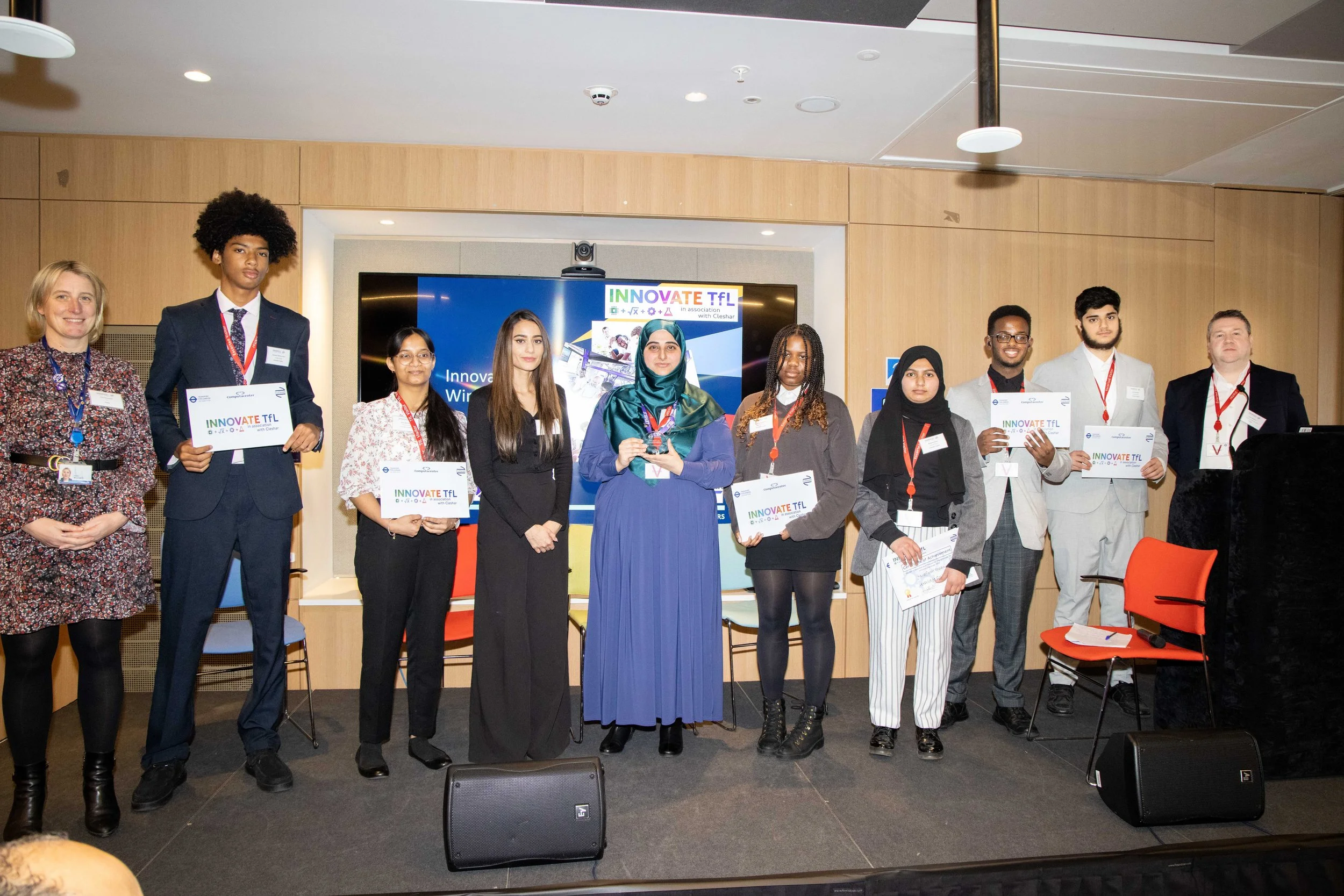
As we've been preparing for National Engineering Day, I've also found myself thinking about the next generation of problem-solvers and innovators.
Many of the people who will shape the future of transport, engineering and technology are sitting in classrooms today. Some are already passionate about STEM subjects. Others may never have considered a career in transport, engineering or technology because they haven't yet seen people like themselves working in those fields.
Sometimes the first step towards shaping the future is simply believing that you have a place in it.
I've seen this first-hand when speaking with students. What stays with me isn't usually the questions they ask about technology. It's the questions they ask about themselves:
Could I do this?
Do I belong here?
Is there a place for someone like me?
Those conversations are a powerful reminder that potential is often there long before confidence is.
And that challenge isn't limited to gender. It extends to socio-economic background, ethnicity, disability and many other factors that influence how people see themselves and the opportunities available to them. Talent exists everywhere. Opportunity, visibility and confidence are often less evenly distributed.
This is also why allyship matters.
For me, allyship isn't about having all the answers. It's about creating the conditions for others to contribute theirs. Sometimes that means opening a door. Sometimes it means amplifying a voice that hasn't been heard. Sometimes it simply means taking the time to listen to a perspective different from our own.
So when we talk about Engineering the Future - Ideas That Will Shape Our World, perhaps the most important question isn't what those ideas will be.
It's who feels able to contribute them.
Because the future won't be shaped by technology alone. It will be shaped by people: by the confidence to speak up, the curiosity to listen and the willingness to see value in perspectives different from our own.
If we can create environments where more people feel they belong in the conversation, we'll not only build stronger teams and better organisations, but we’ll also create better solutions for the communities we serve.
And that is a future worth shaping.
Beverley Rust
Chair, Women's Colleague Network Group, TfL
Annual membership for Women in Transport is £60, providing access to professional development and networking opportunities. Corporate packages are available; for inquiries, please email us or visit our website.
Our partnership packages are a flexible and accessible way to support Women in Transport and your organisation's equity, diversity, and inclusion objectives. Learn more about our partnership opportunities here and contact us if you would like a meeting to discuss how we can work together.
Follow us on Linkedin at Women in Transport, and at @transportwmn on Instagram for events, news, and updates.