
The most extensive passenger-led station safety survey ever carried out in the UK has a stark message for the rail sector: on the thing women value most – a visible human presence – things have gone backwards.
How empty stations are narrowing women’s freedom to travel
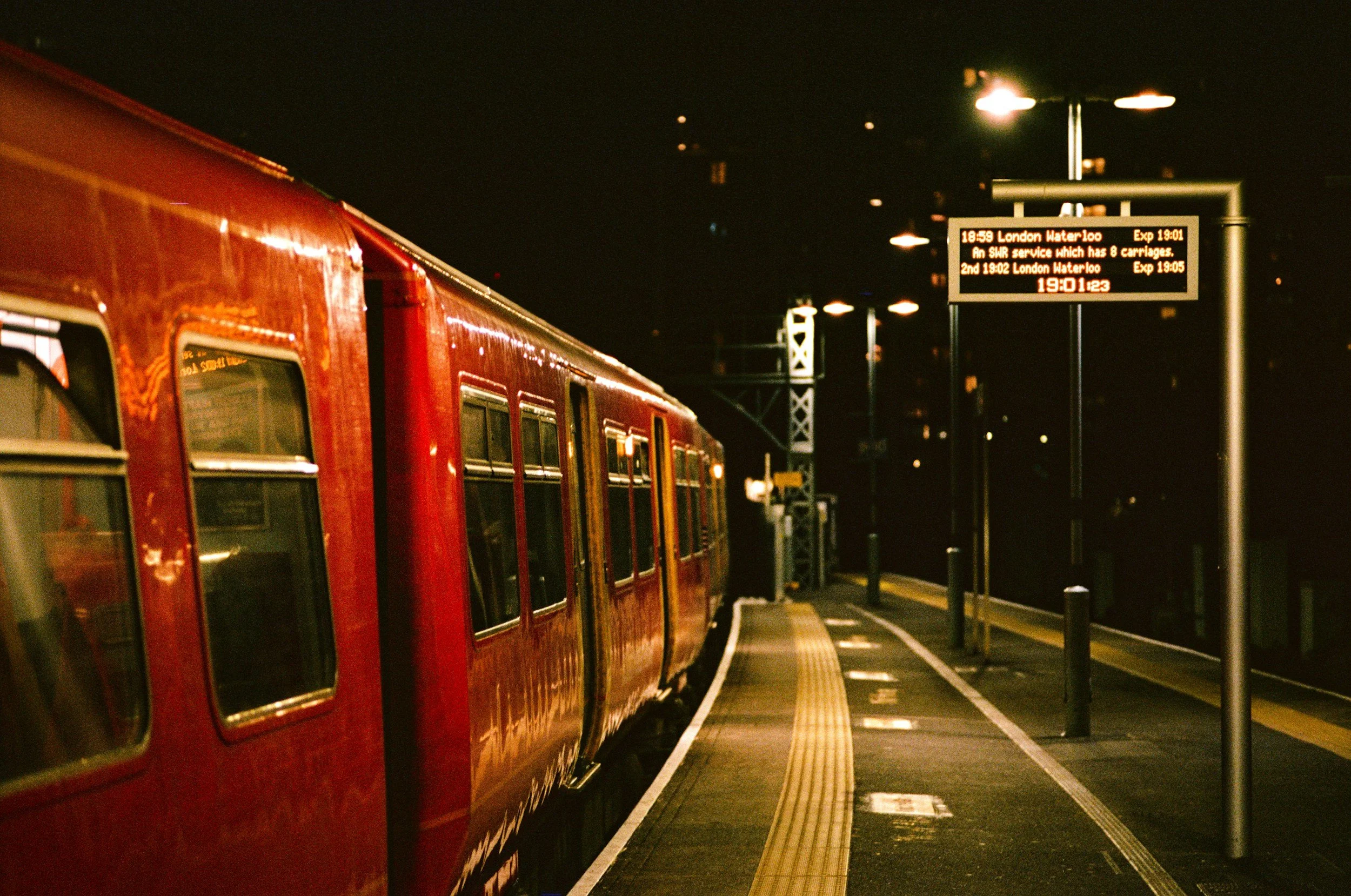
A woman steps off the last train home on a Sunday evening. The platform is empty. There are no staff, no taxis, no posted number to call. Her phone won't connect to make an Uber booking. So she walks home alone in the dark, watching over her shoulder.
This isn't a scene from a campaign film. It's a real account, recorded at Polegate station in 2025 by a volunteer from Soroptimist International Great Britain and Ireland (SIGBI). It is one of hundreds gathered in what is now the most extensive passenger-led assessment of station safety ever carried out across the UK rail network. And it should stop all of us in the transport sector in our tracks.
What the survey found
SIGBI volunteers visited 373 stations across England, Scotland, Wales and Northern Ireland, generating 388 survey entries across roughly 985 platforms. Crucially, they set their findings against an almost identical survey from 2002 – giving us a rare, honest answer to a simple question: over 23 years, has the situation got better?
On some measures, yes. CCTV installations have gone from under a third of stations to 89%. General information boards are now near-universal at 90%. Emergency help points are present at 72%, up from one in three.
But on the thing passengers value most – a visible human presence – it has gone backwards. Only 10% of stations are staffed at all times when passengers are present. Nearly a third are permanently un-staffed. And just 44% display a notice saying who is even responsible for safety, a figure that has barely moved since 2002 despite it being a longstanding requirement.
Why this is a VAWG issue, not just an infrastructure one
The figures above describe a daily, gendered experience of public space.
Both the 2002 and 2025 surveys identified the same unifying concern: the safety of women travelling alone, particularly after dark. The language barely changes across two decades. "It's actually quite a creepy place and, as a single woman, I would not visit after dark," wrote an observer at Bulwell. At Landywood Great Wyrley: "a lone female getting off the train there ... could feel quite intimidated and anxious." At Filey, simply: "grim ... no railway staff are on site."
This is what violence against women and girls (VAWG) looks like at the network level – not only in incidents that make the news, but in the quieter, constant calculations that women must make about which stations to avoid, which trains to skip, and whether a journey is worth the worry.
When stations strip out staff, remove payphones and replace printed information with QR codes that fail where there's no signal, they don't just inconvenience people. They narrow women's freedom to move.
New barriers layered on top of old ones
The 2025 survey also surfaces problems that didn't exist in 2002. The shift to digital-only information assumes every passenger has a smartphone, charge and signal. Many older and disabled travellers do not have these relative luxuries. Removing payphones has made posted taxi numbers and emergency contacts effectively useless for anyone without a working mobile. And staffing cuts now bite into accessibility too: ramps that need a staff member to deploy, lifts left unrepaired, help points that have been broken for – in one case at Altrincham – around 10 years.
Where leadership comes in
There are bright spots worth celebrating. Merseyrail's Safe Stations accreditation, ScotRail's visible Travel Safety Team, and stations such as Chesterfield, Bristol Temple Meads and Gloucester show what good looks like when safety is designed in rather than cut out.
But the survey's most uncomfortable finding is about accountability. In 2002, the report warned that no single body held clear national responsibility for passenger personal safety, including safety for women and girls. The body it nominated has since been abolished, and the gap has never been filled.
For those of us working to make transport safer and more inclusive for women, the evidence is in. The recommendations – prominent accountability notices, audited and maintained help points, minimum standards for un-staffed evenings, retained printed information, and clear national leadership – are practical and overdue.
A railway that women can use without fear, at any hour, is not a luxury. It is the baseline. The data, and the women who gathered it, are asking us to finally treat it that way.
The full SIGBI Railway Station Safety Survey 2025, including its longitudinal comparison with 2002 and all 10 recommendations, is available to read by clicking the button below.