
Written by Sonya Byers OBE, CEO, Women in Transport
Women in Transport launched our latest whitepaper Navigating Allyship in the Transport & Construction Sector at Highways UK 2026 with a panel of leaders from across transport, expertly facilitated by Shireen Ali-Khan.
There was plenty to celebrate. We have policies, colleague networks, increasingly visible leadership and a much greater willingness to talk about inclusion than perhaps we did a decade ago.
But one message came through particularly strongly: having the right intentions is not the same as creating meaningful change.
Allyship is about what we do.
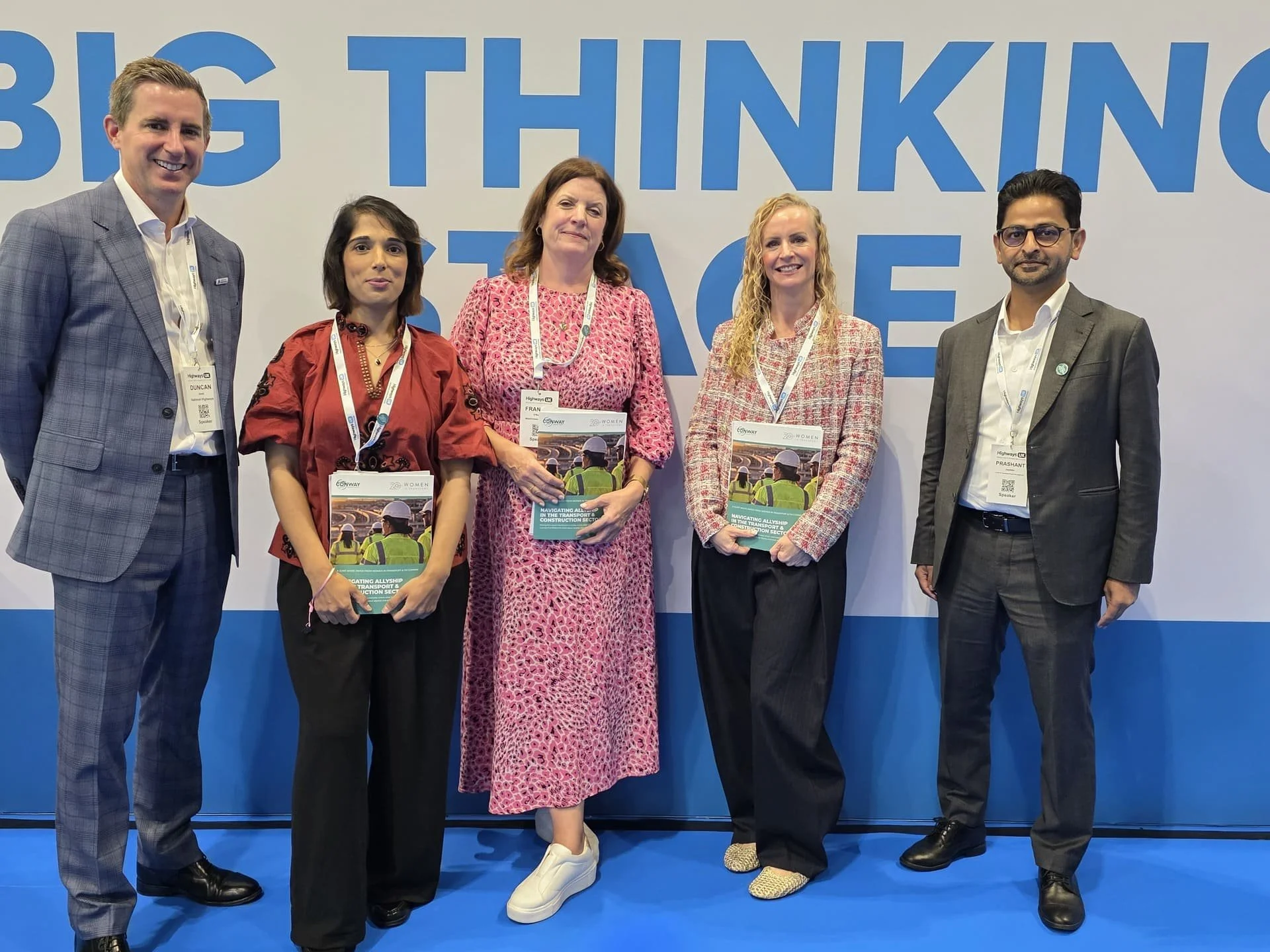
Duncan Smith, Shireen Ali-Khan, Frances O’Rourke, Maria Pratt and Prashant Jagdale.
From policy to practice
Maria Pratt, Customer Experience Director, FM Conway, captured one of the central tensions in our discussion: we have the policies, but we still have work to do.
That distinction matters.
A workplace can have excellent policies on paper and still leave people feeling unheard, excluded or unable to speak up. The real test is what happens in people's everyday experience.
Duncan Smith, Chief Operating Officer, National Highways, spoke about celebrating the positives of allyship. For him, allyship is an opportunity to actively support colleagues, particularly women as the Sponsor for National Highways women’s network, and celebrate the diversity within our sector.
And visibility matters. Duncan pointed out that, with several panels to choose from at Highways UK, he had deliberately chosen to participate in our discussion. As a leader, simply showing up made a statement: this matters, and I am prepared to be visible in supporting it.
But showing up is only the beginning.
Understanding power and privilege
Frances O’Rourke, Executive Director, Environment & Communities, Westminster City Council, talked powerfully about how evidence had sharpened her thinking about privilege and power.
Whether somebody feels able to act, challenge or speak up can depend enormously on their position within an organisation.
That is an important consideration for our sector.
Much of our approach to inclusion can be designed around office-based employees, yet transport and construction are industries built on a diverse operational workforce. If our conversations about inclusion aren't reaching people working across sites and frontline environments, we need to rethink how we engage.
Maria described this as an acknowledged gap. We need to go to our operational colleagues, rather than expect them to come to the conversation. We need communication channels that allow them to feel heard and listened to, and we need to bring their experiences into decisions.
Frances also made an important observation about privilege itself: too often, the word is heard as criticism.
It shouldn’t be.
Privilege is context. Recognising where we have influence or advantages doesn't diminish our own experiences. It helps us understand when we have the opportunity to use our position to make things better for somebody else.
Making it safe to speak up
Prashant Jagdale, Director, Turner & Townsend, reflected on how his own thinking about privilege has evolved and drew a valuable parallel with safety culture.
As an industry, we understand that good safety doesn't happen because somebody wrote a policy. Leaders create environments in which safety is understood, reinforced and practised every day.
What if we approached allyship with the same seriousness?
We should be creating cultures where people feel safe enough to speak, challenge and participate. That requires trust and genuine relationships, not simply campaigns or corporate messaging.
Prashant described the importance of asking whether we are genuinely trying to build relationships and understand one another.
That feels fundamental to allyship.
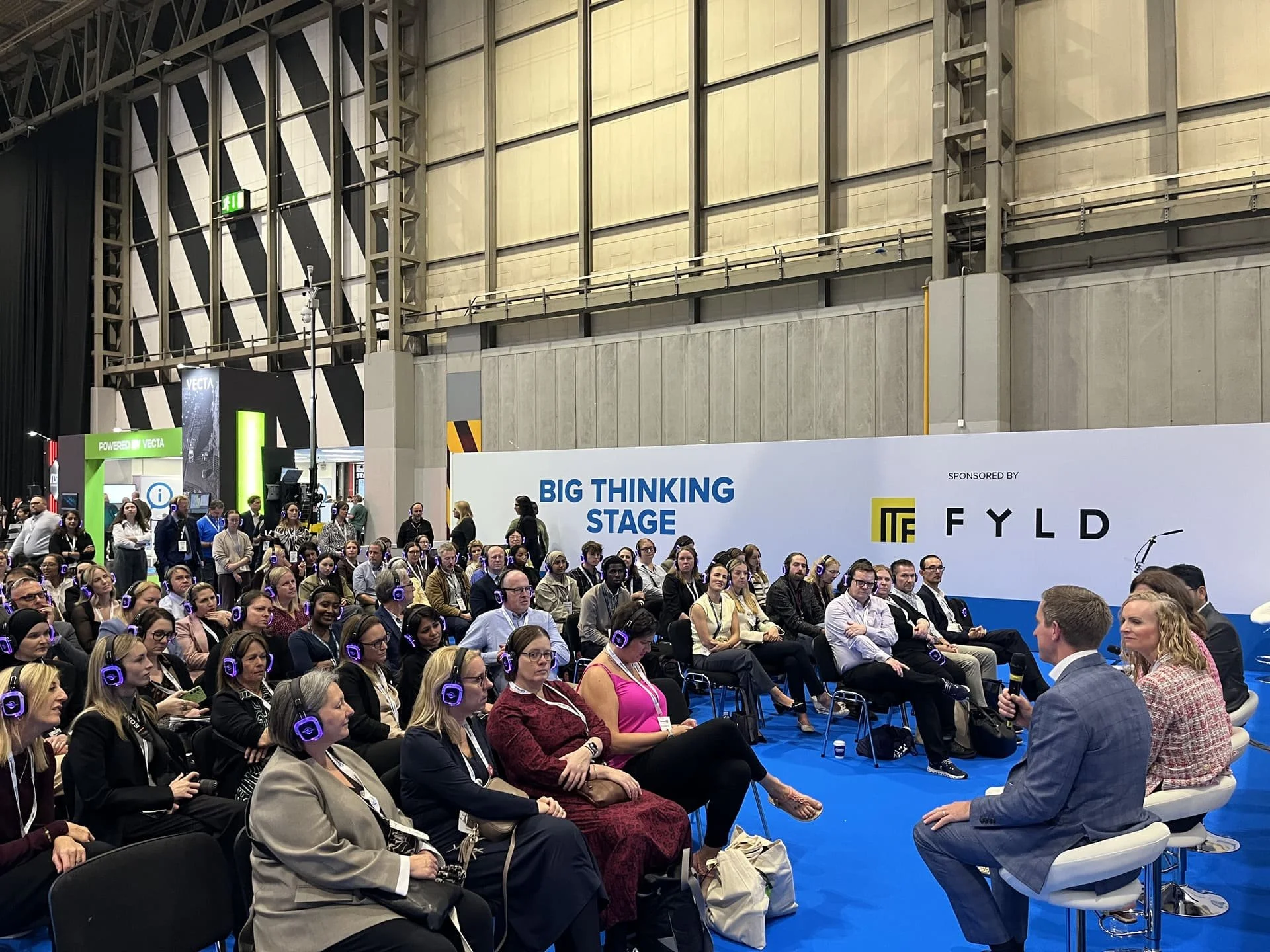
The danger of performative allyship
One question from the panel that has stayed with me:
Did the action genuinely have a positive impact?
Performative allyship can be easy to recognise. Maria made the point that people notice very quickly when leaders say the right things but fail to follow through.
That is why allyship needs accountability.
Frances highlighted the importance of setting targets, being intentional, measuring progress and combining that with visible role modelling.
The Lower Thames Crossing example discussed by Prashant demonstrated what that intention can look like in practice, with contractors given targets around culture, community and carbon, including a target of 35% women in the workforce.
Targets alone are not the solution, but they establish an expectation. As Maria put it, we need to set a standard and work towards it.
Allyship is often practical
Some of the most powerful examples from the discussion weren't grand gestures. They were practical interventions.
We talked about menopause and its impact on women's sleep, energy, concentration and decisions about remaining in the workforce.
Duncan described sponsoring a menopause and hormonal support colleague network. By taking on that role as a male leader, he is helping to make the subject visible and reduce the sense that it should somehow be taboo.
That is a tangible example of allyship: identify an issue affecting colleagues, lend your influence to it and help create the conditions in which people can talk openly.
Mentoring is another opportunity. At its best, mentoring isn't knowledge travelling in one direction from the senior person to the junior person. It is two people learning from each other. That reciprocal relationship can expose us to perspectives and experiences different from our own.
We need to reach beyond the converted
There was also an uncomfortable truth in the room.
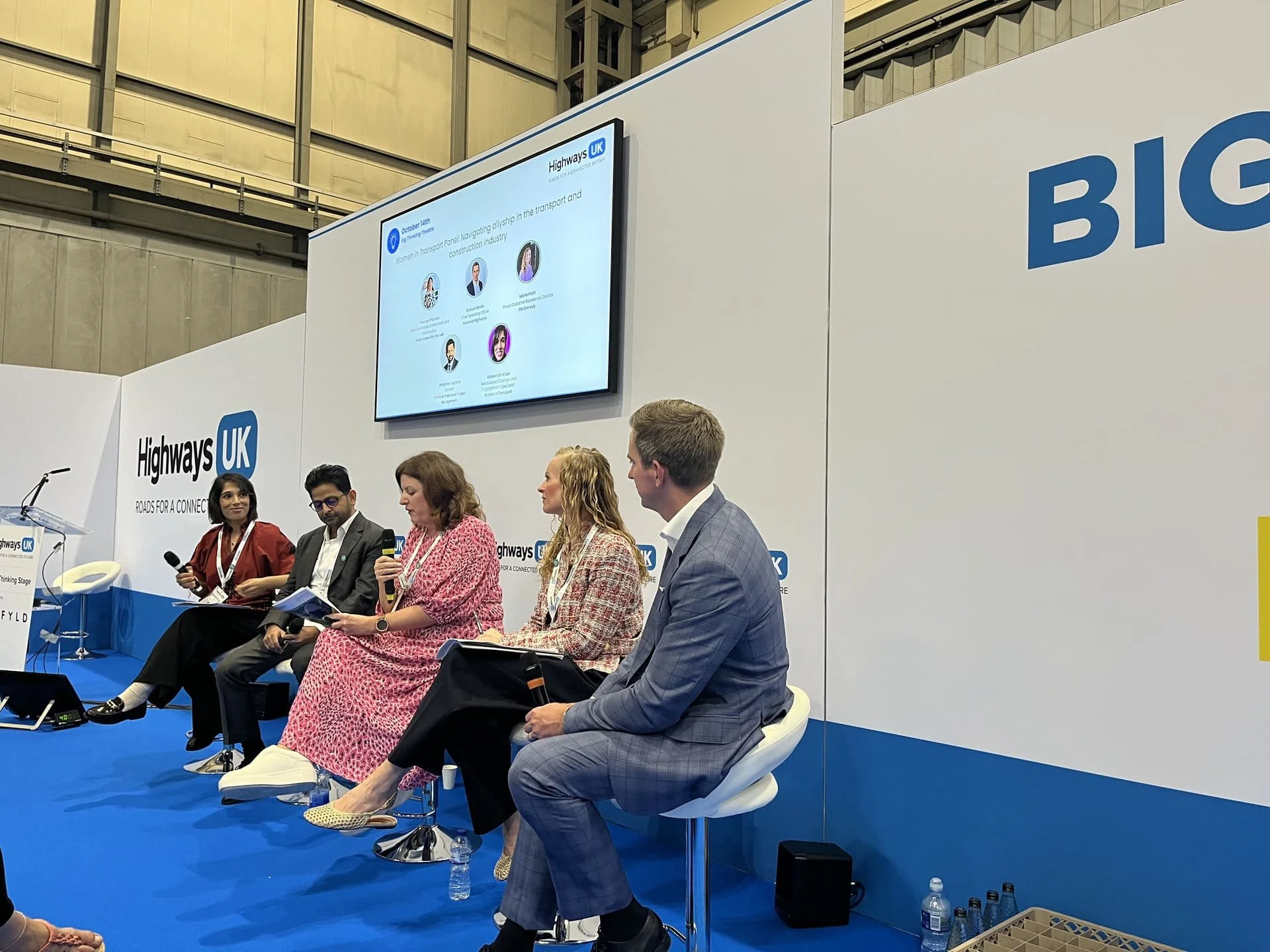
As Duncan observed, we had a full audience, but it was predominantly women. Were we, to some extent, preaching to the converted?
If allyship remains primarily a conversation between the people who already care deeply about inclusion, its impact will always be limited.
We need more men in these conversations. We need senior leaders and operational colleagues. We need different generations and backgrounds represented. And we need to recognise intersectionality, because nobody's workplace experience is defined by a single characteristic or life experience.
This becomes especially important as our sector faces the challenge of an ageing workforce and the need to attract and retain the next generation of talent.
The next generation is watching
Perhaps one of the most striking contributions was Duncan's reflection on engineering across generations.
When he studied, there were around 100 people on his course and only three women. His son is now considering engineering and, while female representation has increased, women still represent only around 20% of the students that were considering similar courses as his son in recent university visits.
That is progress. But it is nowhere near enough.
We are still confronting assumptions about which jobs are for women and which are for men. Changing that cannot be the responsibility of women alone. It requires collaboration across our sector and a determination to keep the issue on the agenda.
For Frances, that responsibility is personal too. As the mother of two boys, she wants them to grow up to be good allies.
I think there is something important in that. As a mother of a young daughter and son, this resonated with me,
Allyship isn't simply another workplace initiative. It is part of the culture we create and the behaviours we model, both for today's workforce and the generations coming behind us.
From allies to action
Nobody gets allyship completely right.
What matters is a willingness to listen, learn and act.
That could mean sponsoring a colleague network. It could mean mentoring someone whose experience is very different from your own. It might mean asking whether operational colleagues are actually being reached by an inclusion programme, challenging an assumption when you hear it, setting measurable targets, or simply using your position in the room when someone else doesn't have the same power to speak.
And it means asking ourselves that deceptively simple question:
Did my action genuinely make a positive difference?
For me, that's where allyship becomes meaningful.
Transport depends on collaboration. If we bring that same instinct to inclusion, allyship can become more than something we discuss at conferences. It can become part of how our industry leads.
And that is how we create a transport sector where everyone has the opportunity to belong, contribute and thrive.
I encourage you to take meaningful action today, download and read our latest whitepaper. Share it with your organisation and colleagues. Get involved in the conversation in our Women in Transport community platform.