
There is a particular kind of energy at Transport Ticketing Global. It is hard to define, but you feel it from the first morning session, a room full of people who genuinely care about something most passengers never think about until it goes wrong.
Ticketing is not glamorous. It does not make headlines. But it is, quietly and fundamentally, where the passenger experience is made or broken. Get it right, and travel is seamless. Get it wrong, and the best network in the world feels impossible to use.
Two days at TTG26 on 17th and 18th March reminded me, once again, why I love this corner of the transport industry.
The conversations that matter most happen in the margins
I have attended enough conferences to know that the programme is only part of the value. The real work - the ideas that spark, the partnerships that form, the problems that get solved happens in the corridor between sessions, over coffee, at the end of a long day when guards are down and people speak plainly.
TTG26 delivered that in abundance. I reconnected with colleagues and friends I have worked alongside for years, many of us navigating the same complex territory: franchising transitions, retail channel strategy, back-office integration, the unfinished business of truly interoperable ticketing across modes and operators.
The shared language of this world, EMV capping, account-based ticketing, transaction brokers, ITSO - can sound impenetrable from the outside. But at TTG, it is the vocabulary of a community genuinely trying to make public transport easier for the people who depend on it most.
Young professionals making their mark
One of the genuine highlights of this year was watching younger professionals step into the spotlight and own it.
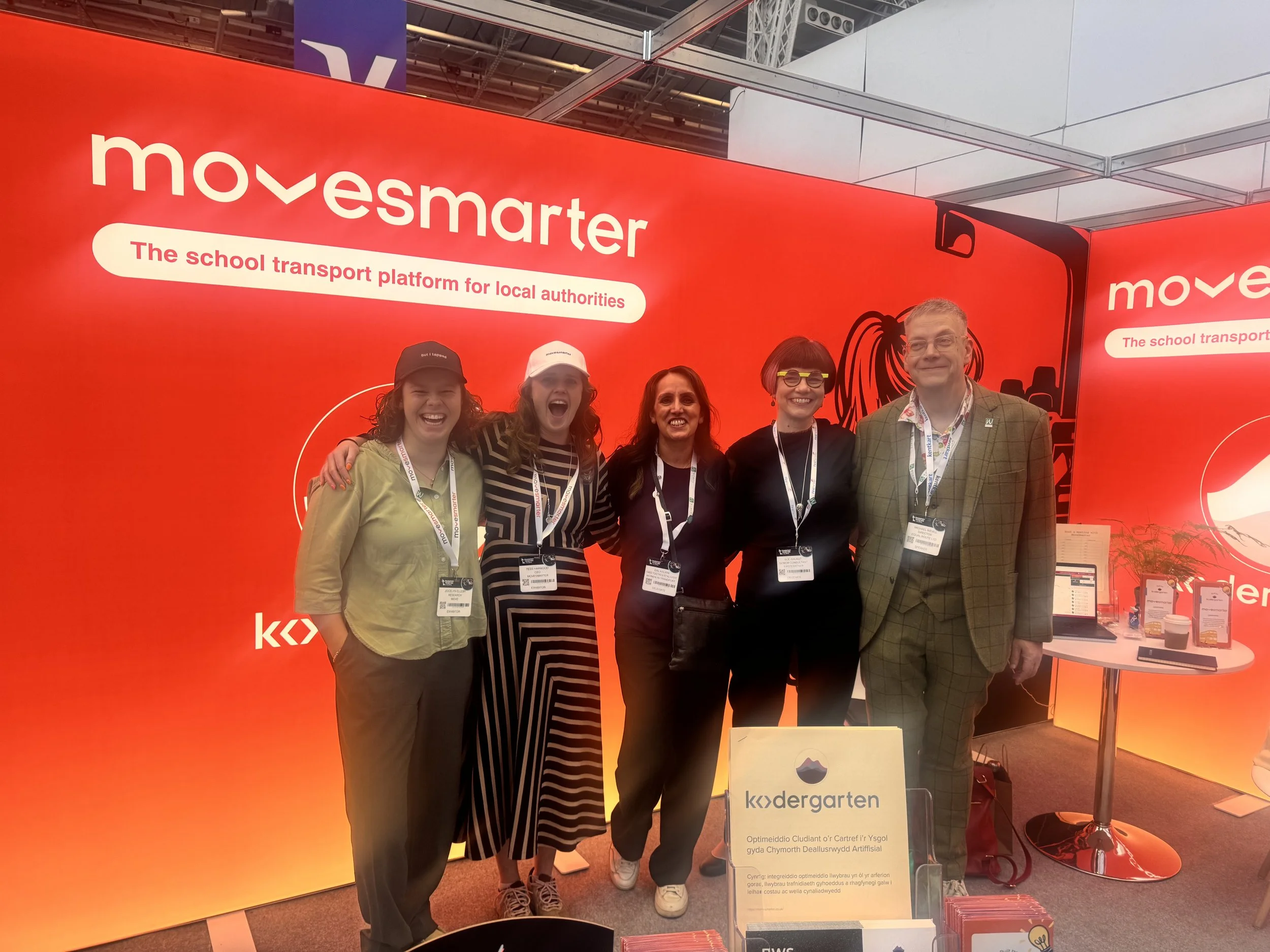
Tess Harwood, CEO of Kodergarten, and her team were a standout presence at TTG26. Their MoveSmarter platform focused on home-to-school transport. It is exactly the kind of innovation that deserves attention: practical, purposeful, and squarely focused on a segment of transport that is chronically underserved by technology.
Tess recently joined Women in Transport, along with colleague Jocelyn Elleby, and it was a pleasure to support them through their first TTG. Watching them engage with confidence, presenting their work, holding their own in technical conversations, building their networks - a reminder of why investing in the next generation matters so much.
The industry needs people who bring fresh thinking to old problems. TTG26 had plenty of them.
Representing Women in Transport
I attended TTG26 on behalf of Women in Transport, alongside colleagues Michael Wevill and Sue Walnut. It was a genuinely proud moment to represent an organisation that is growing its reach into specialist, technical parts of the industry like ticketing and retail.
Women in Transport exists to ensure that women at every level and every specialism in our industry are visible, connected, and supported. Events like TTG are important spaces for us - not just to network, but to demonstrate that women are not just present in transport, we are leading some of its most complex and consequential work.
If you work in fares, ticketing, retail, or passenger experience and you are not yet connected to Women in Transport I would love to hear from you.
Start with the WHY and never lose sight of it
In the midst of all this innovation the platforms, the APIs, the account-based architectures and the procurement frameworks, it is easy to get lost in the what and the how. TTG26 was a timely reminder that we must always begin with the why.
The customer. The passenger. The person standing at a bus stop in the rain, trying to work out how to pay. The parent navigating the school run. The older resident who finds a touchscreen baffling. The commuter who just wants to know that their fare is fair.
This matters more than ever right now. As local authorities across England take on greater control of their bus networks through franchising, and as the Rail Delivery Group’s reforms begin to reshape how rail ticketing is designed and delivered, we are at a genuine inflection point. The decisions being made today about systems, standards, and structures will shape the passenger experience for a generation.
And yet, there is a real risk that in the complexity of transition, the customer becomes an afterthought rather than the starting point. Franchising authorities are rightly focused on contracts, governance, and compliance. Technology suppliers are focused on integration and delivery. Everyone is busy. The passenger, who has no seat at the table, can quietly slip to the bottom of the priority list.
The answer is not to slow down innovation, quite the opposite. The answer is to make innovation earn its place by demonstrating what it does for the person at the end of the journey. Simpler. More convenient. Better value. More accessible. These are not soft outcomes - they are the whole point.
What TTG26 also reinforced is that the industry works best when it works together. The era of siloed delivery - operators, authorities, and technology providers each pulling in their own direction has to end. Integrated ticketing cannot be delivered in isolation. Passenger-centred design cannot be achieved when every party is optimising for their own system rather than the shared outcome.
The conversations at TTG give me hope that the will is there. Local authorities, operators, technology providers, and industry bodies were all in the room many of them genuinely listening to each other. That collaborative instinct, nurtured and sustained, is what will turn good intentions into better journeys.
What stays with me
Every year, I leave TTG with a mix of inspiration and impatience. Inspiration, because the talent in this industry is extraordinary. Impatience, because the pace of change - particularly in integrated, multimodal ticketing still lags behind what passengers need and what the technology can deliver.
But events like this matter. They sustain momentum. They remind practitioners that they are not working in isolation. And they surface the next generation of thinkers and doers who will eventually finish what we started.
See you at TTG27.
Annual membership for Women in Transport is £60, providing access to professional development and networking opportunities. Corporate packages are available; for inquiries, please email us or visit our website.
Our partnership packages are a flexible and accessible way to support Women in Transport and your organization's equity, diversity, and inclusion objectives. Learn more about our partnership opportunities here and contact us if you would like a meeting to discuss how we can work together.
Follow us on Linkedin at Women in Transport for events, news, and updates. You can also follow us on Instagram @transportwmn.